

By Prof. Khalil Alsalem M.D FRCS, FICO
CAIRS Stands for Corneal Allogenic Intrastromal Ring Segments. In other words, it is a ring-segment “spacers” made from human donor corneal stroma (allogeneic tissue), implanted into intrastromal tunnels to flatten/regularize the ectatic cornea—conceptually similar to synthetic ICRS (Intacs/Ferrara), but biologic instead of plastic.
What is Keratocnus?
Keratoconus is a progressive eye condition in which the cornea becomes thinner and bulges forward into a cone-like shape. This irregular shape causes blurred vision, glare, halos, and increasing astigmatism. While corneal cross-linking (CXL) is effective in stabilizing the disease, many patients still struggle with visual quality and may not tolerate contact lenses. For these patients, procedures designed to reshape the cornea—such as intrastromal corneal ring segments—can significantly improve vision. One of the newest developments in this field is CAIRS (Corneal Allogenic Intrastromal Ring Segments), a biologic alternative to traditional synthetic corneal rings.
How Does Cairs work ?
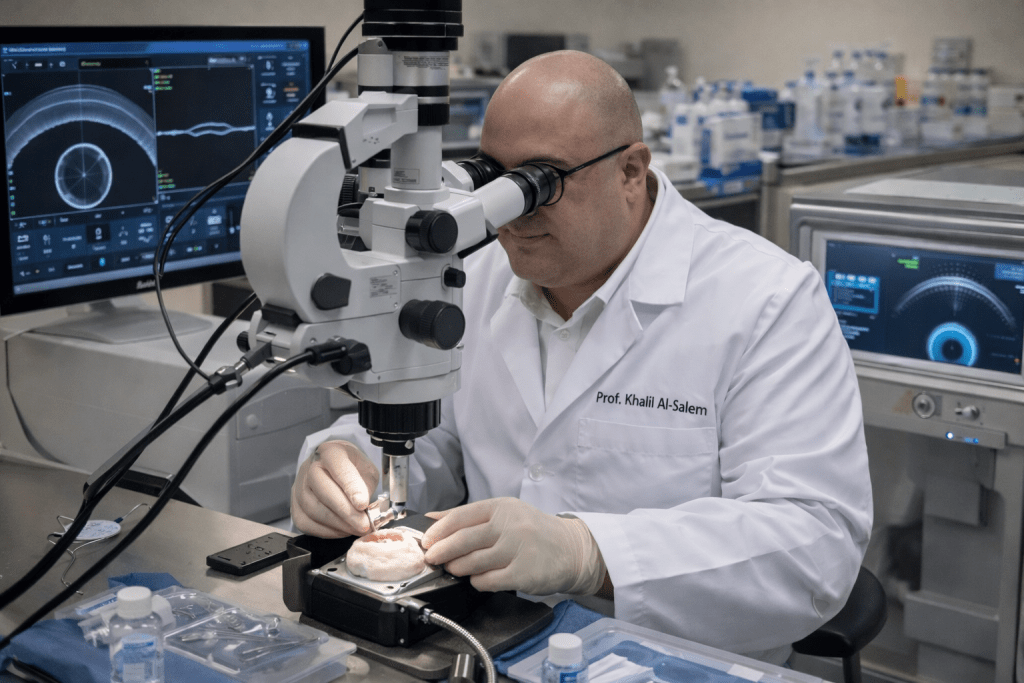
CAIRS works on the same principle as conventional ring implants: small segments are placed within the corneal tissue to flatten and regularize the cornea. However, instead of using synthetic plastic material, CAIRS uses donor corneal stromal tissue. Traditional devices such as Intacs and Ferrara Ring are made from polymethyl methacrylate (PMMA), a durable synthetic material. CAIRS, on the other hand, uses biologic tissue that more closely resembles the patient’s own cornea, which may offer advantages in terms of compatibility and integration.
Surgical technique in CAIRS
The surgical technique for CAIRS is similar to that of traditional intrastromal corneal ring segments. A tunnel is created within the cornea, most commonly using a femtosecond laser, and one or two customized donor tissue segments are inserted into that tunnel. By adding volume to the mid-peripheral cornea, the central cornea flattens, reducing steepness and irregular astigmatism. This can lead to meaningful improvements in uncorrected and corrected visual acuity. In many cases, CAIRS is combined with corneal cross-linking to both stabilize and reshape the cornea, addressing both the biomechanical weakness and the optical distortion of keratoconus.
One of the main reasons CAIRS has gained attention in keratoconus treatment is its biologic nature. Because the implanted segments are made from human corneal tissue, they may integrate more naturally into the surrounding stroma. This has raised the possibility of lower rates of extrusion or long-term intolerance compared to synthetic implants. Traditional corneal rings such as Intacs and Ferrara Ring have an established safety record and have been used successfully for many years, but they remain foreign materials within the eye. Complications such as ring extrusion, migration, infection, glare, or corneal melting, although uncommon, are well documented.
Another important advantage of CAIRS is customization. Donor tissue segments can be shaped and sized to better match the specific cone pattern of the patient. Since keratoconus varies greatly from one individual to another—some cones are central, others are inferior or asymmetric—this flexibility may allow more tailored corneal reshaping. Traditional synthetic rings also follow surgical nomograms, but surgeons are limited to predefined implant sizes and arc lengths.
Keys to improve clinical out comes
In terms of clinical outcomes, current studies suggest that CAIRS can significantly reduce corneal steepness (including Kmax), improve corneal topographic regularity, and reduce refractive error. Many patients experience better visual acuity and improved tolerance to glasses or contact lenses. Reported complication rates are generally low in the short to mid-term follow-up available so far. However, it is important to note that CAIRS is a relatively newer technique compared to traditional ring implants, and long-term data are still evolving. In contrast, synthetic corneal rings have decades of follow-up supporting their effectiveness and predictability.
When considering CAIRS versus traditional corneal rings, patient selection remains crucial. Factors such as corneal thickness, stage of keratoconus, prior cross-linking, and visual expectations all influence decision-making. CAIRS may be particularly appealing for patients seeking a more biologic approach or in cases where surgeons prefer tissue addition rather than synthetic implantation. However, traditional ring segments remain a reliable and effective option with a strong evidence base.
In summary, CAIRS represents an exciting development in the management of keratoconus. By using donor corneal tissue instead of synthetic material, it offers a more natural method of reshaping the cornea while preserving the same fundamental principle as intrastromal ring surgery. While traditional devices like Intacs and Ferrara Ring continue to play an important role in corneal surgery, CAIRS expands the therapeutic options available to patients. As more long-term research becomes available, its exact place in the modern keratoconus treatment algorithm will become even clearer.


